
 Free and Next Day Delivery*
 Up to 10 Year Warranty
 Installation Available
 Instant Credit - Apply
Benefits of Height Adjustable Desks
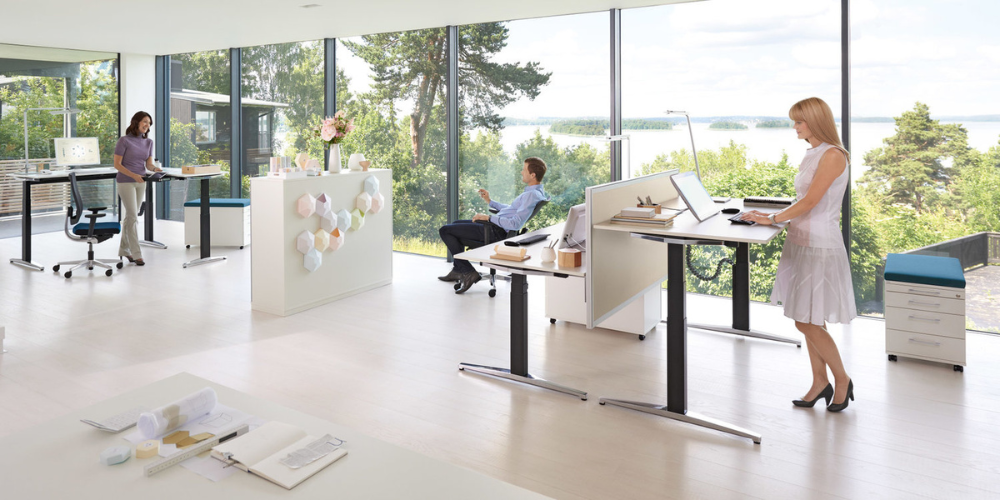
In today’s modern office, height adjustable desks are becoming a popular choice for many. The constant movement of sitting and standing not only improves user’s blood circulation but also keeps the mind active which can be neglected from staying constantly seated. Being able to choose the right height to suit your body type and physicality is something which every office worker should have the freedom to choose. Spending the majority of the day in a sedentary position can be detrimental to our health, not only can it increase our risk of diabetes and heart disease but can also contribute to weight gain and obesity.
Fortunately, with fast advances in technology; height adjustable desks can partly negate the harmful effects of being sat down too much.
Below are some benefits of using a height adjustable desk:
1. Improved overall wellbeing including improved mood and energy levels
A study carried out in 2011 found participants who reduced spent time sitting by 66 minutes per day had improved mood state and reduced upper back and neck pain by 54% (1). Prolonged periods of sitting can result in a lack of motivation and make us be susceptible to depression and anxiety. The addition of a height adjustable desk can encourage users to be more active and less sedentary.
2. Reduced back pain
With back-pain being one of the most common medical problems amongst office workers from some experiencing acute to chronic pain, it’s no surprise that a height adjustable desk could help to alleviate this pain. Studies have shown employees with long-term back pain reported a 32% improvement in lower back pain after using standing desks for several weeks (2,3)
3. Lowers your risk of weight gain and obesity
Consuming more calories than you burn is what ultimately leads to weight gain and prolonged sitting during work hours means less energy is being ‘used’ throughout the day. This could explain why sitting for long periods of time is strongly linked with metabolic disease and obesity (4). Spending half the day sitting and half the day standing could help to burn up to an extra 1000 calories per week according to a study carried out in 10 participants (5).
4. May lower your risk of diabetes and high blood sugar levels
With individuals that have type 2 diabetes or insulin resistance, it can be said their blood sugar levels increase greatly after meals and the more they do the worse it is for your health. A study from 2014 showed that standing after lunch for 180 minutes can reduce the blood sugar spike by 43% when compared with a group who sat for the 180 minutes (5).
5. Improved posture and help to tone muscles
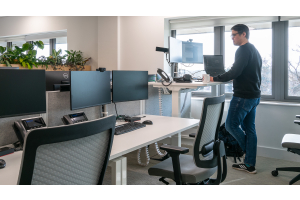
It goes without saying that standing uses more muscles than sitting and with this your core, legs, knees and ankle joints will be strengthened and toned every minute you stand. It’s important when standing that you assume the correct position with both feet firmly on the ground below your hips, your laptop screen should be at eye level with your chin parallel to the ground and elbows at 90-120 degree angle. Ergonomic experts have recommended standing 5-15 minutes of every hour when using a height adjustable desk.
Our Recommended Products
-
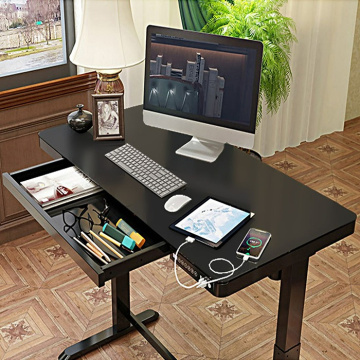 Smart Height Adjustable Desk with Drawer and USB PortsExcl. VAT from £375.38Incl. VAT from £450.46
 -
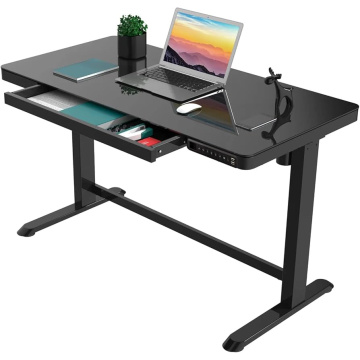 Height Adjustable Smart Desk with Glass Top, Drawer and USB PortsExcl. VAT from £396.92Incl. VAT from £476.30
 -
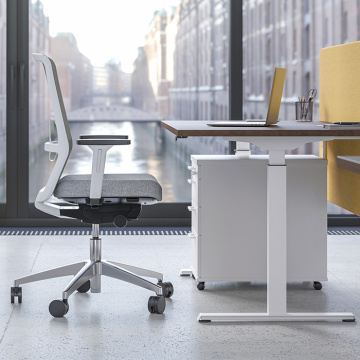 B-Active Sit-Stand Desk 800 DeepExcl. VAT from £600.12Incl. VAT from £720.14
References
(1) Reducing occupational sitting time and improving worker health: the Take-a-Stand Project, 2011 - PubMed (nih.gov)
(2) Breaking up workplace sitting time with intermittent standing bouts improves fatigue and musculoskeletal discomfort in overweight/obese office workers - PubMed (nih.gov)
(3) Impact of a Sit-Stand Workstation on Chronic Low Back Pain: Results of a Randomized Trial - PubMed (nih.gov)
(4) Sedentary time and its association with risk for disease incidence, mortality, and hospitalization in adults: a systematic review and meta-analysis - PubMed (nih.gov)
(5) Standing-based office work shows encouraging signs of attenuating post-prandial glycaemic excursion - PubMed (nih.gov)



Website : https://www.ergoyou.in/collections/monitor-arms